






















Short answer: ceramides are fats that hold your skin barrier together, sealing in moisture and keeping irritants out. Constant aircon, hot showers, sun and over-exfoliation deplete them — leaving even oily, humid-climate skin feeling tight, dry or reactive. Rebuilding the barrier is the fix.
What the skin barrier actually does
Your outermost skin is like a brick wall — skin cells are the bricks, and ceramides, cholesterol and fatty acids are the mortar. When that mortar is depleted, water escapes and irritants get in, causing dryness, sensitivity, redness and flaking. You can have oily, acne-prone skin and still have a damaged barrier.
Why it happens in our climate
It sounds odd in a humid country, but air-conditioning is very drying, hot showers strip oils, daily sun exposure damages the barrier, and aggressive actives or scrubs erode it further. The result is the "my skin is oily but tight" paradox many people feel.
How to protect and rebuild it
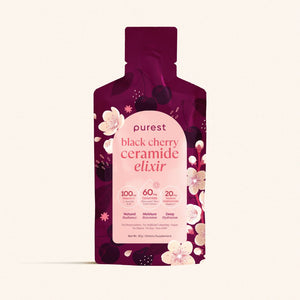
Cleanse gently, avoid very hot water, don't over-exfoliate, and use barrier-supporting ingredients like ceramides. Hydration from within helps too. Our Black Cherry Ceramide Elixir is formulated around skin hydration and barrier support as an ingestible complement to your topical routine. It supports skin generally — it's not a treatment for skin conditions like eczema, which deserve medical care.
FAQ
Can oily skin have a damaged barrier? Yes — barrier damage causes tightness and sensitivity regardless of oiliness.
Does aircon really dry out skin? Yes, prolonged air-conditioning lowers humidity around your skin and increases water loss.
How long to repair a barrier? Often a few weeks of gentle, consistent care; stop harsh actives while it heals.
General education only, not medical advice. Persistent dryness, eczema or dermatitis should be assessed by a healthcare professional.